What TST: The Soccer Tournament provides to College Soccer Players
Different structure, different opponents, a different level of competition

Summary
• TST’s unique 7v7, winner-take-all format gives elite college soccer players a rare opportunity to compete directly against current and former professionals, testing their skills in high-pressure, high-intensity environments.
• Duke’s Sam Courtwright, Arizona State’s Kierra Blundell, and North Carolina’s Bella Devey earned spots on TST’s 2026 Best Seven team, highlighting how top collegiate talent can excel against seasoned professional competition.
• Beyond the spotlight, TST serves as a proving ground for future pros, helping college players sharpen technical skills, adapt to professional-level physicality, and gain valuable experience rarely available before turning professional.
For six days at the end of May and the start of June Cary, North Carolina welcomes current and former soccer stars, rising collegiate names, and amateur players all competing in TST:The Soccer Tournament’s 7v7 competition. It’s a celebration of soccer meant to involve and create community, bringing together teams and fans from across the world.
TST has three entry options: men’s, women’s, and mixed, each competing for an end prize of one million dollars. The tournament uses target score time, where after the full-time whistle, a target score is set using the formula of the leading team’s score plus one. Both teams have an unlimited amount of time to reach this target score, however a player is removed from the field every three minutes until the score is reached.
For collegiate soccer players, the tournament offers chances to play with professional soccer players, bolster their skills in a different format, test themselves against different competition and physicality, and improve their own profiles. It’s a six-day crash course into the semi-pro world where collegiate stars can cut themselves against professional athletes.
The poster child of this in 2026 is Sam Courtwright, a redshirt junior at Duke. Courtwright played for Simply Football FC, who bested the U.S. Women to get to the championship, ultimately falling short in target score time to the Iowa Demon Hawks. With four assists and two goals, Courtwright was named to the tournament’s Best Seven. Her performance as a standout in a field full of professionals demonstrates the level collegiate soccer is at in the United States. It also boosts confidence on a personal level and gives a concrete measurement on the gap (or lack of a gap) between the amateur game and the professional.
Arizona State’s Kierra Blundell and the University of North Carolina’s Bella Devey were also named to the Best Seven of the TST tournament, demonstrating collegiate athletes can more than hold their own in the semi-professional world. Devey, who started all 21 UNC matches as a freshman, can use her tournament experience to bolster her resume.
Blundell, the Big 12 Freshman of the Year who sat out most of her sophomore season with injury, can use her TST experience to enhance her confidence returning to the field.
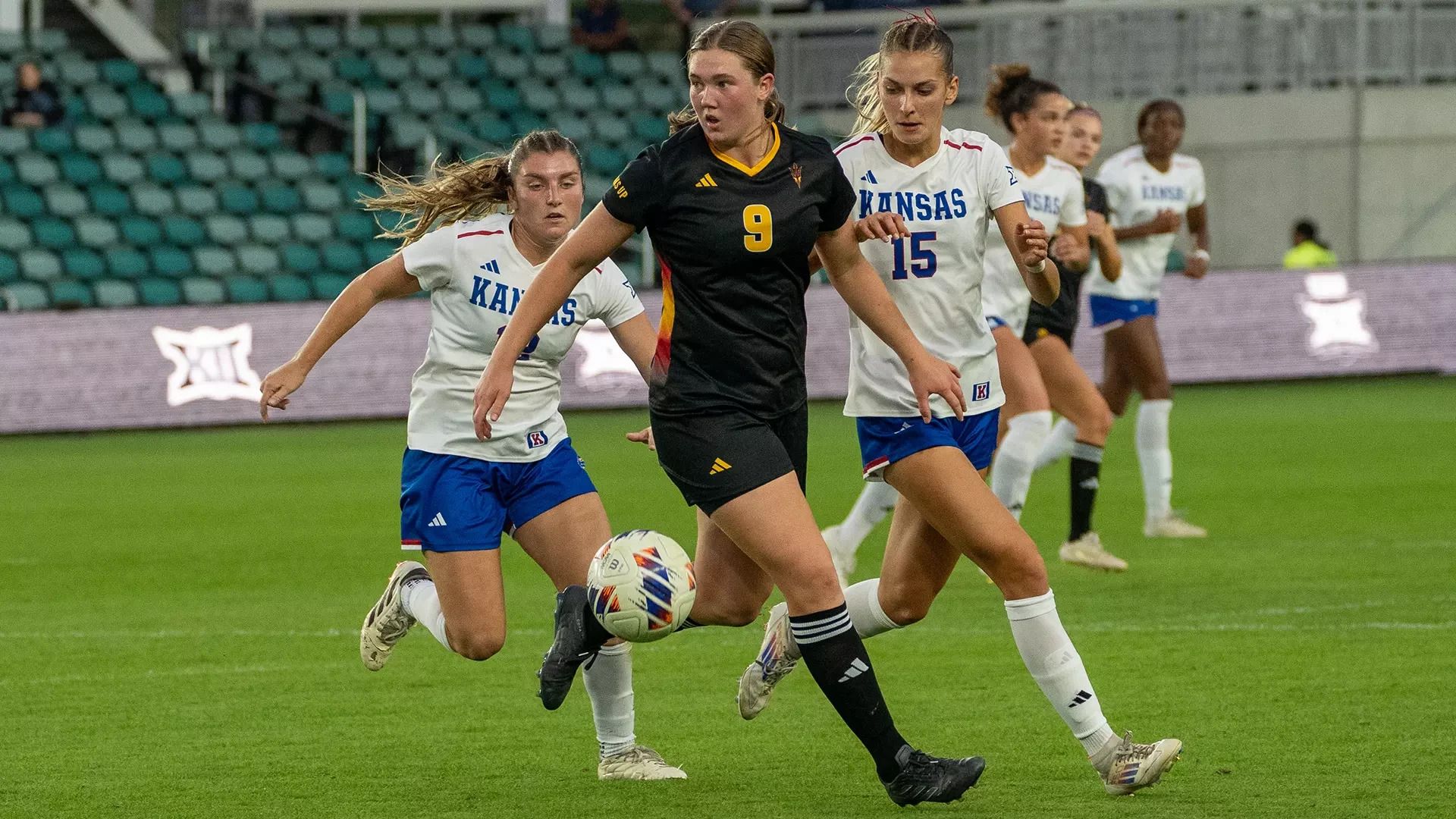
All three Best Seven collegians are concrete data points in measuring the level of college soccer—especially factoring in the level of personal skill necessary in a smaller playing field with less teammates to cover mistakes.
There are other ways TST serves as a proving ground for collegiate athletes, showcasing their skills while readying them for the professional game.Teams can be composed of various ages and various levels of experience, all competing at a very highlevel. College athletes have pointed out that the benefit of playing college ball is that your opponents are all relatively the same age with the same levels of experience. TST allows collegiate players a taste of what professional level physicality looks like, over a relatively compact schedule of six days.
It’s also not a one and done physical battle. College stars competing can find themselves matching up with professional players across different levels. Courtwright, for example, lost that championship game against a team stacked with National Futsal experience from multiple countries. That wealth of experience to match up against provides a game to game barometer of one’s own game and tolerance for physical matchups. TST is a way to step outside the college bubble
.
Another aspect that helps collegians is the target score which provides collegiate athletes a chance at repeatedly getting reps in high pressure situations. With each game coming with a bonus game winning goal situation, college athletes can practice performing in situations they might not realistically see until a conference tournament at the end of the year.
With less space and less teammates to rely on, the 7v7 format, combined with a target score, creates the conditions for up and coming collegians to learn how they respond in high pressure situations; either protecting a lead or trying to come back from behind. The format also ensures teams in the lead continue to push for that final goal, denying the ability to sit back and defend till time runs out.
7v7 also forces players to rely more on personal skill in tight quarters, honing in on 1v1 battles and tight space passing that are not necessarily mainstays of the college game. With the various levels of professional experience represented across the tournament, TST provides both a laboratory to work on 1v1 skills and a way for collegiate stars to learn new tricks of the trade. It’s also a way to hone communication and leadership skills in an environment that prioritizes high stakes and quick turnarounds all with a crowd watching.
From tournament format to team roster construction, TST serves as a proving ground and laboratory for collegiate players. Three of the seven Best Seven players in 2026 came from the collegiate ranks, demonstrating the tournament’s use in allowing collegiate stars to shine while matching up against and with current and former professional soccer players. It’s a way to break out of the collegiate bubble and fine tune skills in a six-day whirlwind of high intensity, high physicality soccer. Besides being invited to train with an NWSL side, it’s one of the only ways college players can match up against professional athletes before going pro, providing a valuable stage for both testing and proving capabilities.