Off the Field Championship Moments
The Culture and Communication of College Cup Teams

Summary
- Stanford, Florida State, Duke, and TCU women's soccer relied on skill and team culture to earn a spot in the College Cup.
No one would call making the College Cup easy. The combined record of the final four teams is 69-9-10. Stanford, Florida State, Duke, and TCU won a lot over the course of the three month regular season. But that record is made up of 90 minute increments, maybe 110 for post season overtime games. Just as crucial to a deep tournament run are all the moments of belief off the field, away from the game day lights and structure. Those moments build the intangibles–trust, commitment, team chemistry–that can have a locker room believing they'll be playing soccer in December.
For TCU that off the field moment came early.
“We do team culture, and like bonding, early in the summer,” Seven Castain offered. “I’ve been a part of a lot of different teams who’ve done it and I’ve never had a team open up the way that this one did.”
The first girl to share “bawled her eyes out,” Castain added, “we’d known each other for two weeks.”
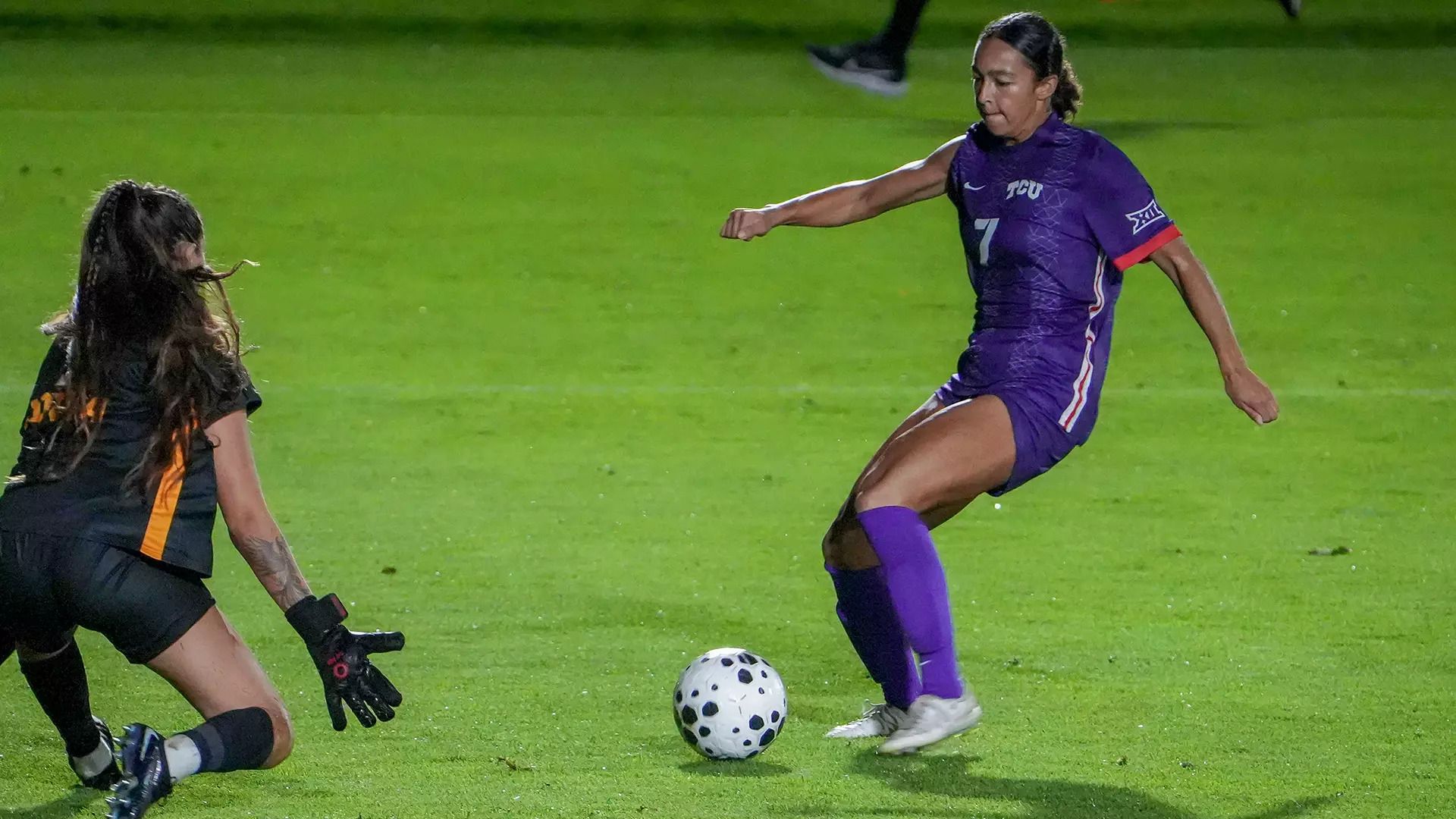
Every girl on the team shared their story, contributing to the vulnerability of the moment, but also creating a space for support and allowing the team to “be there for each other so early in the season.” Before the Horned Frogs even stepped foot on the field, the team had already demonstrated their commitment to each other.
Castain reiterated, “when I say this team was a family, we know the coach’s story, we know each other’s story, we know each other.”
Knowing each other off the field is perhaps some of what helped to create all those moments of magic that TCU produced throughout the tournament. Players knew each other, in ways that had nothing to do with soccer, but added a layer of familiarity, of trust, to the on field play. The level of support found off the field directly contributed to the way different players stepped up in support of advancing the team goal at different parts of the season.
Like TCU, Duke’s off the field moment came down to team chemistry. “All of it,” redshirt junior Kat Radar answered, “we’re really close as a team.”
“We really connect off the field and I think that creates a lot of our chemistry on the field.”
Devin Lynch added, “culture’s kind of a word that people throw around, but it really means the world to our team.”
“We really enjoy each other and that’s not the case on every single team,” Lynch added, “Every single player on that team is a part of my family.”
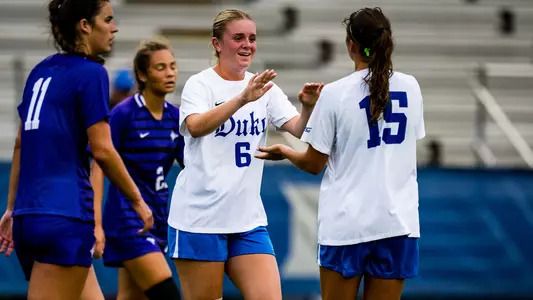
In the moments after a second straight semi-final loss, visibly upset, turning back to culture, to off the field hangouts and chemistry, demonstrated the bond that allowed the Blue Devils weather back to back losses in the regular season without breaking down. In subverting individual egos, Duke managed to field a young team that went further than most people expected possible. It was also a team devastated because the internal expectations were to go further, a semifinal exit wasn’t considered a possibility.
Like Duke, Stanford made the 2024 College Cup only to lose in the semifinals. Jasmine Aikey highlighted that experience as crucial to addressing what was going wrong midseason with a loss to UCLA and then tying Clemson. Knowing what it would take meant knowing “we had to step it up.” Those post game conversations ended up “being a turning point in our season.”
Experience does help. Stanford head coach Paul Ratcliffe “know[s] early” if the season will be a long one “when it’s a really competitive group.” He highlights Elise [Evans] and Jasmine [Aikey] for creating “a really positive and competitive environment” that is the key to deep tournament runs. The right blend of positivity and competition creates “an electricity at training sessions, as there is in games.”
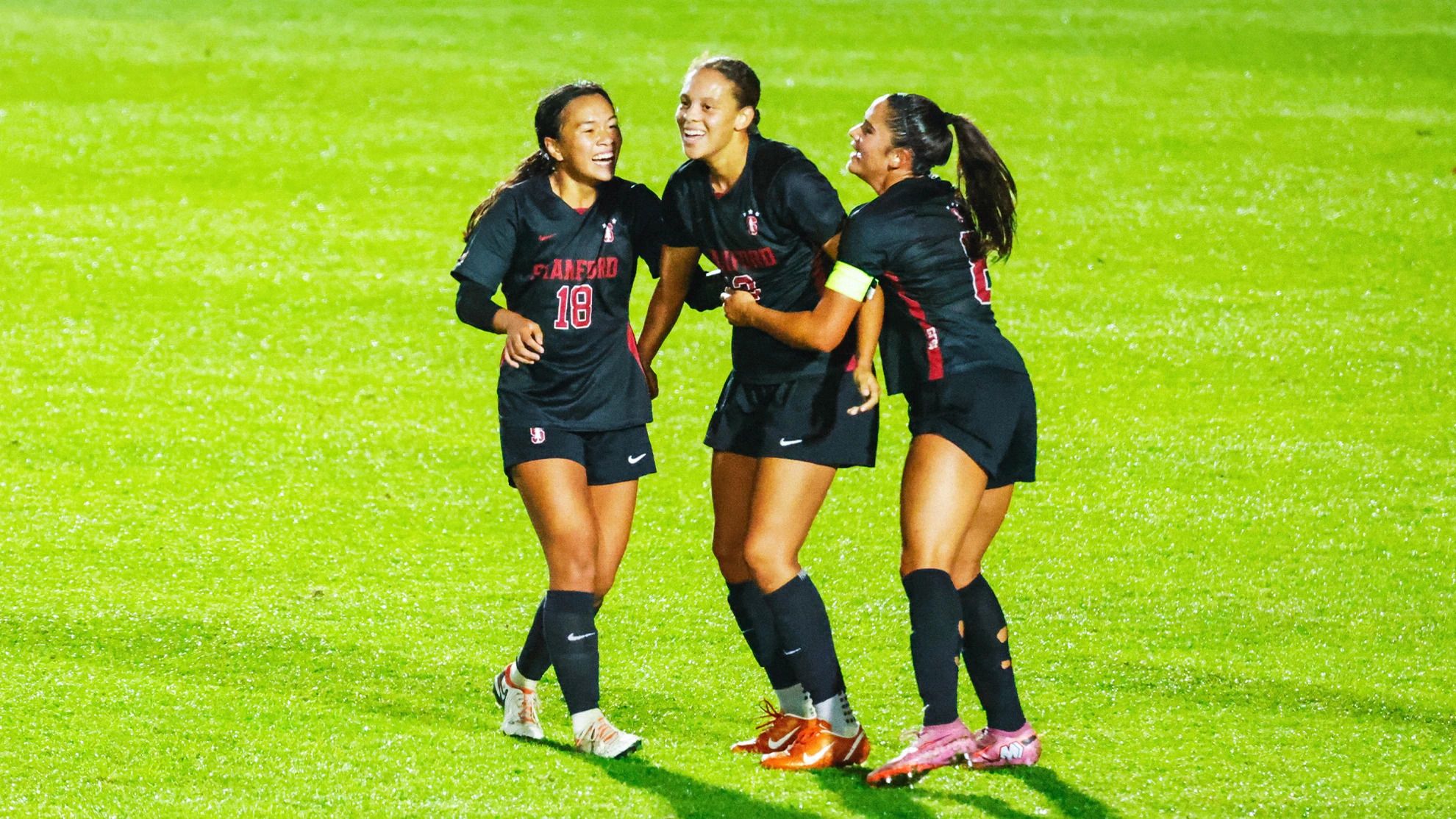
Being able to train with the same competitive atmosphere as a game makes those on the field big game moments seem not as scary, or at least moments that have been practiced before. The game feels more comfortable, more practice. “They’ve continued to grow and kept that competitive spirit going,” Ratcliffe added.
Florida State's Yuna McCormack took the question in another direction, highlighting how focused the team was immediately after the game on recovery. For her, the attention to detail and immediate refocusing to the next big game is what has helped the team continue to compete.
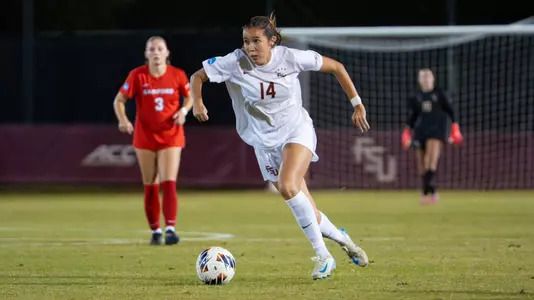
Head Coach Brian Penske focused on the moments after the loss to Stanford, highlighting the leadership group who, after the back-to-back losses to Notre Dame and Stanford, called a meeting. “When we talk about player-led teams, that’s what you need if you’re gonna be a champion.”
“Mimi Van Zanten, who’s last words to us, she was reading off her phone and she just looked up, ‘cuz we don’t want to lose anymore.’” Penske saw that moment as a sign of “maturity, desperation” and an intangible strength of the team in preparing to play the kind of soccer that would guarantee games in December.
It was in that player-led moment where the reflection wasn’t coming from the coaching staff that Penske saw as a moment leading to that semifinal winning press conference. Five of the six members of the leadership council had won a national championship before, and knowing what it would take but committing to pushing the team towards that goal anyways, was a choice that happened off the field but led to the on field performances.
That moment of quiet leadership directly translated to on field success. Penske joked with his players before the start of the championship game, “you guys, we need to pretend and act like we have decibel measurements on you right now, this needs to be the loudest game of our season.”
“A couple times they were yelling at each other, a little bit of disorganization, but that’s ok, they’re trying to solve things, they’re trying to sort things out,” Penske added.
That transfer of off the pitch quiet responsibility to loud communication during a College Cup final is a tangible measure of the intangibles that carried each of the four semifinal teams to Kansas City. Those off the field moments solidified the belief that it would be a long season, for some teams from day one, sustaining trust, chemistry, and support in all the non-game moments–the majority of the season.