Peaks and Valleys: Which Teams Have Jumped Around Most in the AP Poll
How consistent is UCONN? How Volatile is Tennesse? and more ...


Women’s college basketball just wrapped up its 17th week of the 2025-2026 season. The AP Top 25 poll is a go-to source for fans and journalists to see which teams are thriving and which are struggling. But the poll tells us more than just the ranking of the country’s top teams.
At 5wins, we decided to dig deeper. By analyzing the AP Poll over the season, we created our own metrics to look beyond who’s “best” or “worst.” With less than three weeks until Selection Sunday, we’re highlighting trends in team performance, including volatility, range, and overall movement, that paint a better picture of the top teams in the NCAA.
Key Metrics:
- Teams studied: 36 teams have appeared in the AP Top 25 this season. We used data like preseason ranking, current ranking, and overall record to assess each of these teams.
- Volatility: Measures recent poll movement. A low score (0–1) = stable; a high score (6–7) = big swings.
- Range: Difference between a team’s highest and lowest ranking this season.
- Net movement: Shows improvement or regression by comparing a team’s first ranking to its current ranking.
- Handling unranked weeks: Unranked teams were treated as #26. For example, Duke’s range was calculated as 26 (lowest) – 7 (highest) = 19. This isn’t perfect, but it helps us track when teams are in or out of the Top 25, which is the most significant detail we needed to capture.
Best teams by record:
To be honest, we didn’t need to run diagnostics on the AP Poll to figure this one out. The country’s best team all season has been the undefeated UConn. The reigning champions have sat in first place for the entire season. They carry perfect volatility, range and net movement scores of zero — a team simply could not be performing any better.
“Certainly it’s been a journey, and an epic adventure for some of them,” head coach Geno Auriemma said about his team in Sunday’s press conference following UConn’s win over Providence on Senior Day.
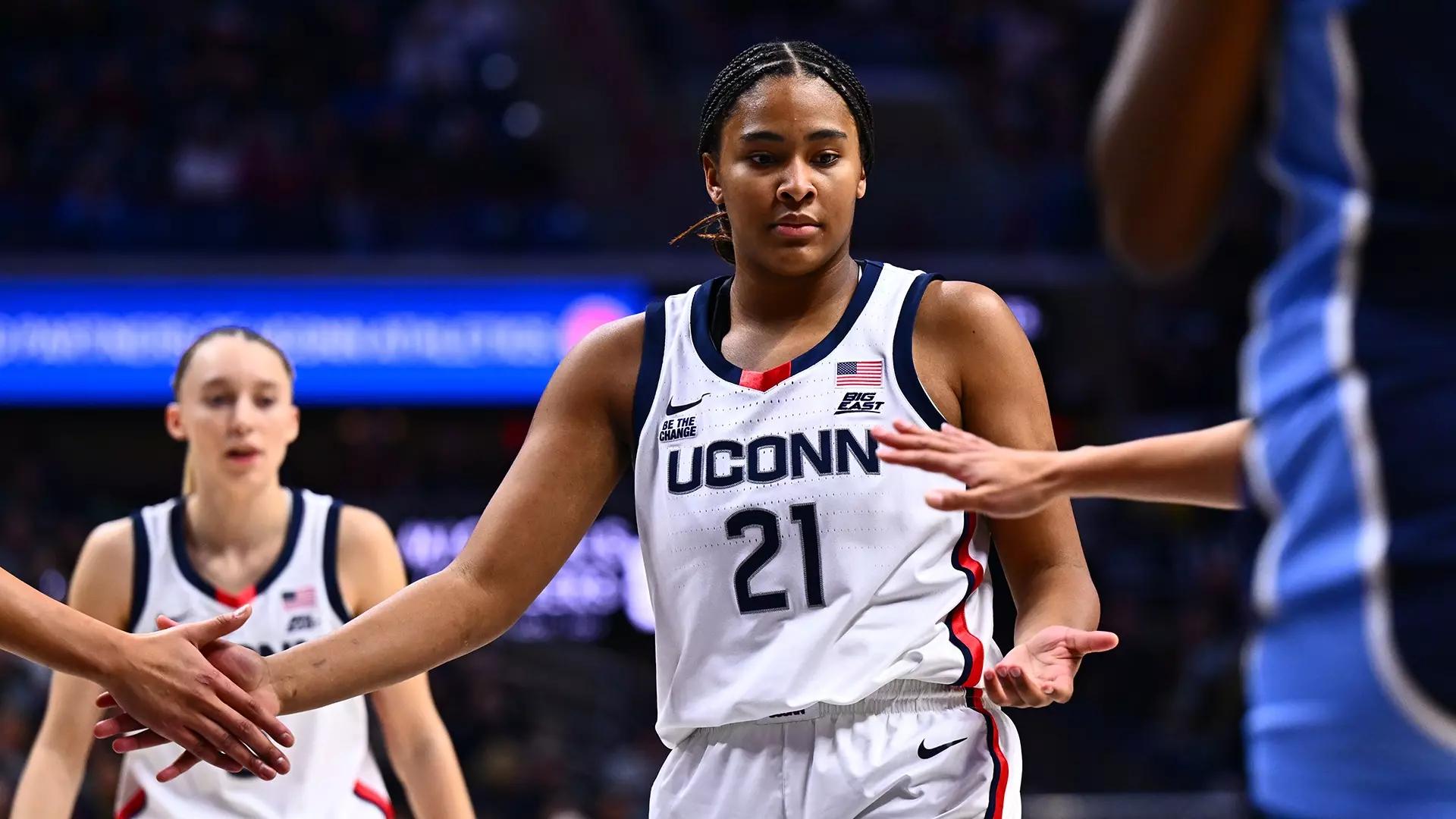
Following UConn, the country’s best teams, in their current rankings, are UCLA, South Carolina, Texas and Vanderbilt. The Bruins, Gamecocks, and Longhorns have all performed consistently well this season, with zeros in volatility and somewhere between -1 and +2 in range and net movement. But Vanderbilt is a different story — their range of 14 demonstrates their huge surge from the start of the season (ranked 19) to now (ranked 5).
Teams consistently in the top:
Regardless of swing, there is something to be said for the consistency of remaining in the Top 25 for all 17 weeks of the season. 16 teams have earned this honor: UConn, South Carolina, UCLA, Texas, LSU, Oklahoma, Maryland, Ole Miss, Michigan, Baylor, TCU, Vanderbilt, Louisville, Iowa, Michigan State, and Kentucky.
For some of these schools like UConn, South Carolina and UCLA, remaining in the Top 25 has included very little movement. But schools like Vanderbilt, Oklahoma, Iowa, and Louisville have roller-coasted their way through the Top 25 this season. And honorable mentions go out to Tennessee, North Carolina, and Washington, who have spent 16, 14 and 11 respective weeks in the Top 25.
Most volatile:
The teams with the highest volatility scores these days are Tennessee (5), Oklahoma (4), Iowa State (4), Michigan State (3), and Baylor (3). Recall that volatility indicates recent movement in the Poll and is not necessarily a reflection of a team’s progression or regression throughout the entire season.
Tennessee tops our volatility charts with 5 because, for the first time all season, the Lady Vols have dropped out of the Top 25. They’ve lost multiple games in a recent stretch, including a 100-93 loss to No. 7 Oklahoma. They’ve dropped seven of their last nine games, which is the most sustained skid in program history.
“That’s the SEC, isn’t it?” head coach Kim Caldwell said after Tennessee’s 100-93 loss to Oklahoma on Sunday. “You’re going to have patches where you look really good, you’re going to have patches where you have a tough stretch. […] I think just be honest with your team — can they handle it or not?”
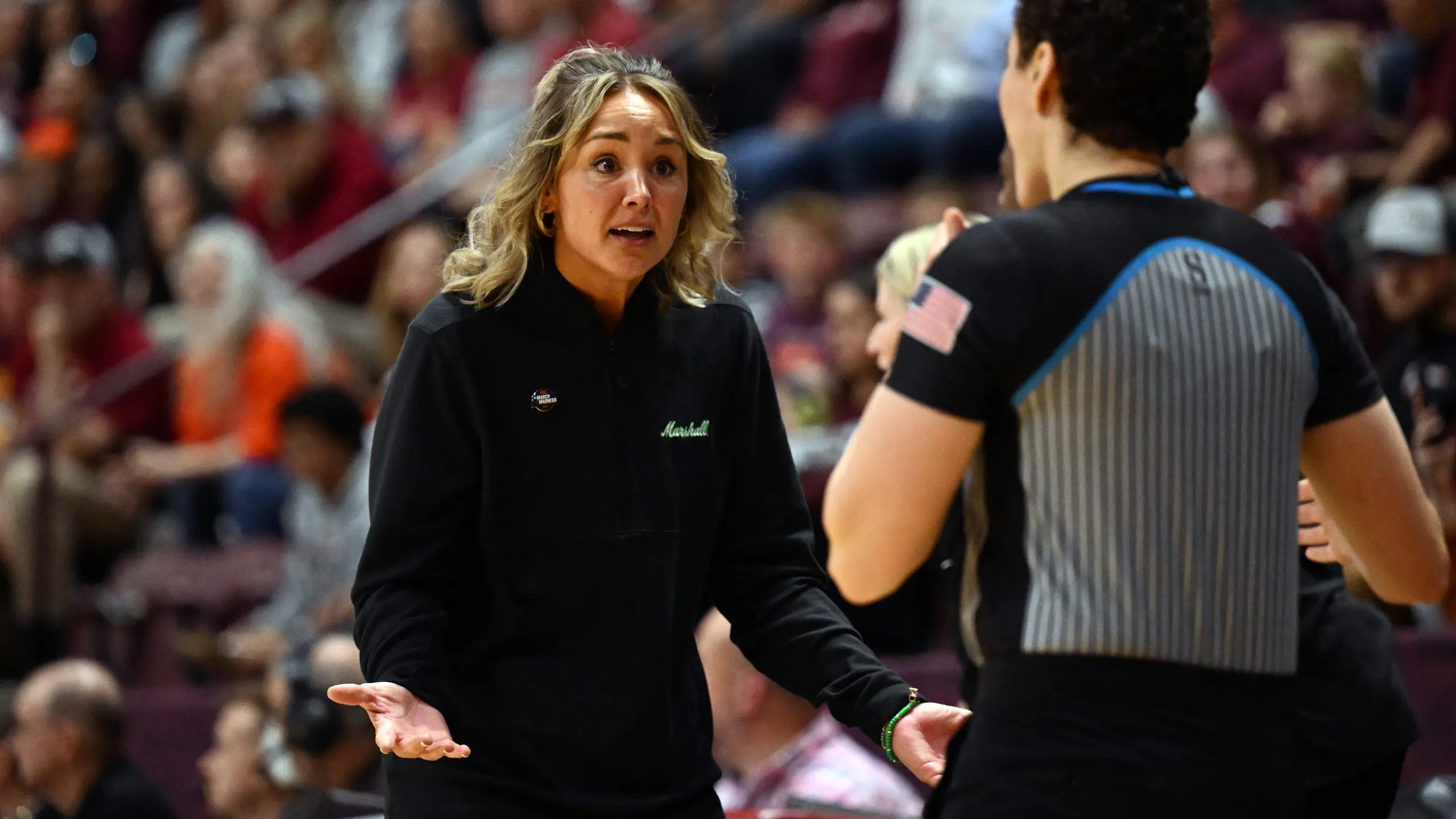
Oklahoma’s volatility rank of 4 shows movement in the opposite direction. They racked up key wins like the one over Tennessee and a big road win over No. 24 Georgia. The Sooners’ recent wins over ranked teams is helping pull them up. Iowa and Michigan State recently jumped up a few notches in the polls, a reward for those programs’ strong wins and consistency, while Baylor suffered a skid due to a loss to Texas Tech and a lack of signature victories against other opponents.
Biggest range:
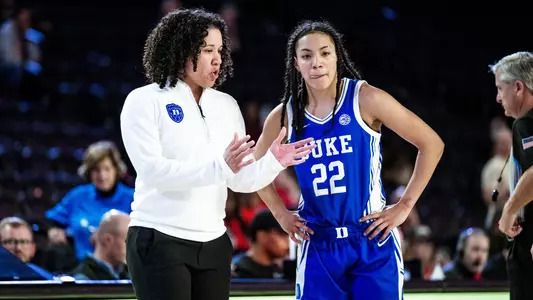
Some teams with a big range have something to boast about, while others would rather not confront that number. Duke comes in with a range of 19, The team started the season at No. 7, then spent eight consecutive weeks out of the Top 25 before coming back in week 12 in 21st place. Now, they sit comfortably at No. 12 and possess a total net movement of only -5, which, at face value, certainly does not tell the full story of this team’s season.
“I couldn’t be more proud of my group,” Duke head coach Kara Lawson said to press after an incredibly close 53-51 loss to Clemson on Sunday. “Over the last two and a half months … those guys hadn’t lost since December 4. That takes a lot of focus, effort, discipline.”
Following Duke in the biggest range are Tennessee, USC, Kentucky, and Ohio State, each with scores of 18. Tennessee’s range represents the difference between starting out at No. 8 but currently flopping into the unranked, and USC has had a similar journey. Though they reached a highest rank of 8 during week 2, they fell out of the rankings by week 11 — they may not be all that much without star Juju Watkins.
The range scores of Kentucky and Ohio State, however, demonstrate how teams can heat up at the right time. The Wildcats started out at No. 24 and currently sit at No. 16; the Buckeyes started out unranked and just reached No. 13 on the Poll. Their net movements of +8 and +13 respectively are some of the biggest gains any teams have seen this season.
Heating up:
In addition to Kentucky and Ohio State (and the astronomical rise of Vanderbilt), a few other teams seem to be striking while their irons are hot. Louisville started out at No. 20 and currently sits at No. 10; West Virginia started out unranked but has climbed to No. 17, and Iowa climbed from No. 21 all the way to No. 9 this season. Each of these teams have exhibited strong play against tough opponents, and their momentum does not look like it will be stymied anytime soon.
Georgia, Texas Tech, and Princeton also deserve nods for making themselves relevant later in the season. Each team started out unranked but now sits somewhere in the Top 25, proving even teams that don’t heat up until the final weeks of the regular season should not be underestimated.
Cooling down:
But of course, there is a flop for every slay. In addition to USC, Nebraska, Iowa State, and Oklahoma State seem to be trending downwards right when they need to be heating up. Nebraska’s losing skid, Iowa State’s 5-game losing streak, and Oklahoma State’s recent close losses have rendered these teams, who saw some real successes this season, out of the current rankings.
Tennessee may be headed down this same path if they can’t steer their ship straight, and Ole Miss, who started out at No. 12, have slipped to 19 after going 1-3 in a particularly tough stretch of play.
Staying steady:
Beyond the top teams, a few others deserve recognition for their steadiness throughout a turbulent season. LSU has kept its net movement to a score of only -1, despite a loss to South Carolina that caused them to drop in the polls midseason. Michigan and TCU boast higher net movement scores (5 and 6 respectively) but have stayed in the Top 25 the entire time without either soaring high enough or dropping low enough to evoke immense reactions.
Conclusions
- Consistency matters, but so does timing. Schools like Iowa, Michigan State, and West Virginia have risen in the rankings because of strong recent performances, particularly against ranked opponents, while teams with mid‑season slumps like Nebraska and Iowa State have slid. Poll voters really like to take late‑season momentum into consideration.
- Slips and surges tell different stories. Some teams, like Tennessee and Baylor, have experienced swings that demonstrate inconsistency or failure to compete in key matchups. On the other hand, teams like Oklahoma and Louisville show that steady, quality wins, even without dominating the charts, can lead to upward mobility.
- Our metrics can’t account for everything: Analyzing the AP Top 25 Poll through volatility, range and net movement helps us understand a lot of the nuance in this ranking system, but there are still things we couldn’t account for. Those include:
- Quality of opponents and magnitude of wins and losses: Teams can rise or fall in the polls by larger margins depending on the quality of the opponent they beat or lose to. Also, sometimes a win or a loss is a fluke, but numbers alone won’t necessarily demonstrate that.
- Injuries and roster changes: These can cause rankings to swing dramatically (for example, USC’s decline is almost entirely due to the loss of Juju Watkins).
- Preseason bias in poll voting: Some voters bring inherent biases, like team reputation or preseason hype.
- Oversimplifying unranked weeks: Treating every unranked team as #26 is straightforward for data, but it does reduce nuance. Not every unranked team is unranked equally!
- AP Poll trends reveal more than rankings. By tracking movement, volatility, and range we can see which teams are surging, which are struggling, and which are poised to make a late-season push into the tournament conversation. This approach gives a deeper picture of the women’s college game beyond just the Top 25 list, and at just the right time — the countdown to Selection Sunday begins now!