How Georgia Softball Star Keirstin Roose Dominates with Type One Diabetes
The Newly Minted Transfer Sounds Off on the Change of School, Coastal Carolina

Summary
- Georgia softball player Keirstin Roose was unexpectedly diagnosed with Type 1 diabetes after routine bloodwork following shoulder surgery, changing how she manages her health and performance as a college athlete.
- With the support of Georgia athletic trainer Anna Fischer and medical staff, Roose has successfully balanced elite softball performance while managing diabetes behind the scenes.
- A graduate transfer from Coastal Carolina, Roose brings proven leadership, academic excellence, and resilience to Georgia as she continues to thrive on and off the field.
After Georgia softball player Keirstin Roose had shoulder surgery, she needed some routine bloodwork done. This is a standard procedure for most college athletes coming back from an injury, especially one that involves major surgery, but for Roose, this visit was different.
Roose discovered her blood sugar was dangerously high. Her athletic trainer at her former school took her to the hospital, but had to leave Roose alone because it was a gameday.
Sitting alone in the hospital in Conway, South Carolina, Roose had tests after tests performed on her to try and discover what was going on and why her blood sugar was so high. She was there all day, and ended up missing five innings of her team’s softball game before she got the answer to what was going on.
Roose was diagnosed with Type One Diabetes (T1D).
Now almost two years later, Roose’s life has changed on the softball field.
At Georgia, Roose works closely with the Bulldogs' softball athletic trainer, Anna Fischer. Before Roose settled into her spot in Athens, Fischer had to work closely with her to establish a good relationship to help monitor her condition.
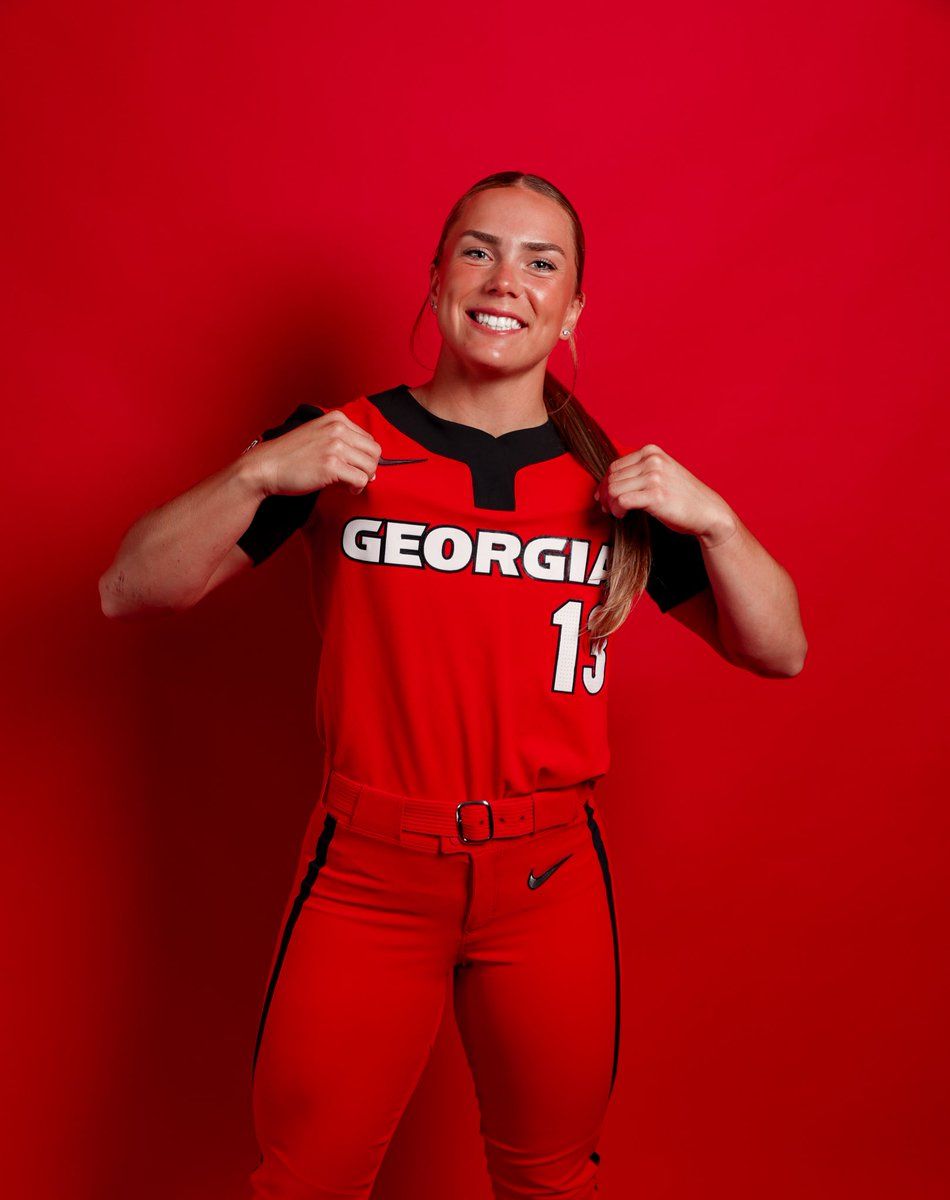
She says that once Roose was courted for recruitment, she had to do more research into the condition.
“She's my first athlete with type one that I've worked with directly,” Fischer says. “So that was, not necessarily, daunting, but it was something that I didn't feel like I knew a lot about. I wanted to be able to help her as best as I could.”
But Fischer wasn’t on her own in researching diabetes. She says that she was able to contact the Bulldogs’ team dietitian and physicians, and they were able to help her find out more ways to support Roose from a closer distance than the professionals work from.
After meeting with the team physicians and dietitian, Fischer says she met with endocrinologists to figure out how to further help her before she ever got to campus.
Roose says a big part of the success she’s had with her health has come from their relationship. She says that her being so diligent with her and so caring helped their relationship grow, which in turn helps Fischer provide better care for Roose.
“I think her personality and willingness to learn made it really easy for me to go to her,” Roose says. “We basically were learning how to work together and I think that's an important part of the collaboration. Having someone like that as your support system, and her being an advocate for all the doctor's appointments and the pharmacy and reaching out to the doctor and endocrinologist, it definitely helps us have someone like that advocating for you. I think that's a huge part of what makes managing it so easy.”
Fischer says that Roose was so willing to be helped, and it has made everything easier for her as well.
She also says that at the end of the day, her job is to help Roose play her best. She’s not just helping her manage her diabetes, but she also has to help her play the best she possibly can. That includes long innings and hard workouts.
Fischer describes diabetes as “background noise” for Roose, saying that while she’s on the field, she’s an athlete, not a diabetic. Fischer’s job is to monitor her sugar and possible symptoms, and Roose’s job is to dominate on the softball field and go hard in her workouts, just like any other athlete.
“It's important for her to be able to play her best,” Fischer says. “Learning how to work with her and manage [diabetes] for her, so that she can truly play her best. It’s just been an important role that I wanted to step in and help her with.”
With Fischer’s help, Roose has been able to be herself on this new team. Roose says that when she first came to Georgia, the transition from senior to a new face was hard, but now that she’s settled in, she has taken on more responsibility.
Growing up, Roose never experienced any Type One Diabetes (T1D) symptoms. She says the closest thing she had to a true symptom before her diagnosis was having floaters in her eyes and having chapped lips.
She always brushed them off as softball things, saying that it was because she looked at the sun on accident catching a ball or her lips were chapped because she was dehydrated while at practice or workouts.
She also says that she would get shaky when she was younger if she didn’t eat, and her dad told her it was just because her blood sugar was low because that was common for him. For Roose however, this was definitely not the case.
“Well, it turns out my blood sugar was actually really high, and it just exacerbated it,” Roose says. “My blobs did not go away.”
Roose says that leading up to her diagnosis, she lost 17 pounds, was thirsty all the time and her lips and vision got worse. So she did what most GenZ people do: she googled her symptoms, and it was right there in black and white.
LSU alumnus, Blane Mire, MD. is a general physician that has dealt with diabetes in patients before. He says that Type 1 can creep into a person's life, and that a lot of the time people don’t notice the changes until it’s to the point of health issues.
“Type one diabetes is the only one that's truly considered autoimmune,” Mire says. “It means that your body just all of a sudden decides to turn on itself and attack the very cells of the pancreas that produce insulin.”
In addition to her discovery of diabetes, she also transferred schools about a year after her diagnosis. Roose is a graduate transfer from Coastal Carolina, where she played the first part of her softball career.
Before the recruitment criteria changed, she started out by emailing coaches when she was 12 years old. Roose was convinced by her coaches that she was behind in the recruiting process, and luckily for her the NCAA bought her more time with the coaching change.
Once September 1 of her junior year hit, she began actively pursuing universities again. She says all it took was one step on Coastal Carolina’s campus for her to decide this is where she wanted to spend the next four years of her athletic and academic career.
“I went on the official visit, and I had some plan for after that, but I went on the official visit to Coastal, and kind of knew that's where I wanted to be,” Roose says. “I canceled all my other visits and played at Coastal for four years.”
During her time at Coastal, she carried a .281 career batting average and was a routine starter for most of her career, but she didn’t only shine on the field. She also got it done in the classroom as well.
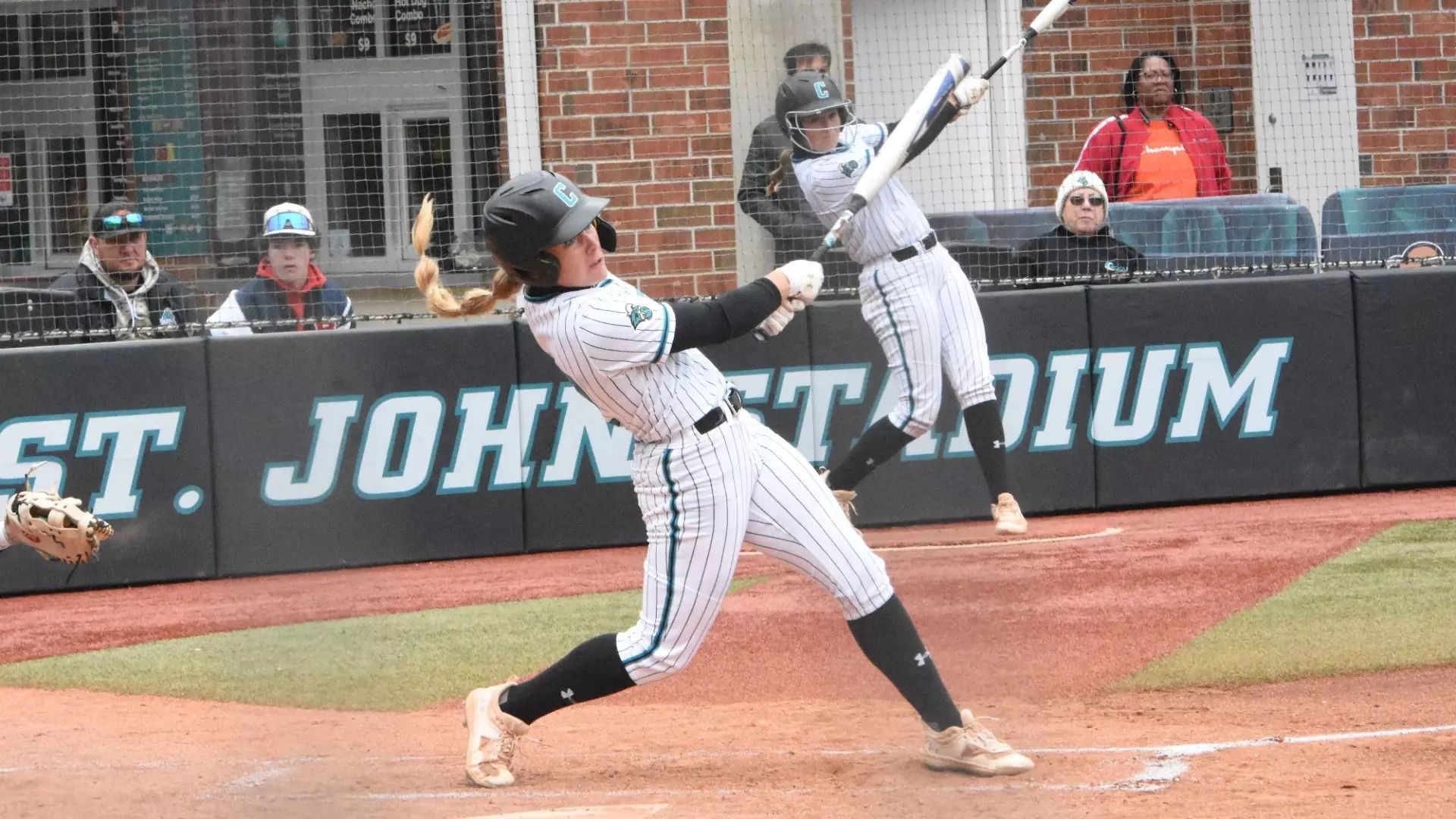
She boasted a 4.0 GPA throughout her four years there, and she also participated in research as an undergraduate student. She presented her work at conferences in the U.S. and Columbia. In 2023 and 2024, she received NCFA All-American Scholar Athlete honors.
Now she’s at Georgia getting her master’s degree, and she has loved every minute of the change since she transferred. Roose says that it has only been good for her.
“The change has only been good,” Roose says. “It's funny you think, ‘Oh, the grass will be greener.’ And you know how sometimes it's not, well, the grass is definitely greener here at Georgia. Other than the players and the coaches, it's like, I just feel spoiled here. I have access to anything I could ever ask for.”
Roose says that she’s a natural leader, and wanting to maintain that at another university was important for her, but it didn’t happen at first. She had to take a step back and enjoy the new experiences she was getting, and then she could settle in.
“I've been a leader at Coastal for about four years now, like ever since freshman year, I kind of had a leadership spot or mentality,” Roose says. “Coming into Georgia, being a transfer and being new, it was kind of hard to take a step back and just try to learn all the ropes. Now I am stepping into a little bit more of my leadership qualities and stuff, but I think [not being a leader] was the biggest transition for me.”