Division I Stars Pull Back The Curtain on Conference Re-Alignment
Athletes breakdown the logistics and changes they face daily


- Cross-country conference realignment is pushing college athletes into brutal travel schedules, causing sleep deprivation, increased injury risk, and mental health strain.
- Schools and conferences attempt to reduce the impact with smarter scheduling and sports psychology support, but commercial travel and packed competition calendars still disrupt performance and academics.
- While realignment brings new exposure and opportunities, the athlete experience reveals a growing tension between profit-driven expansion and student-athlete well-being.
When a West Coast program travels across three time zones, lands after midnight and needs to compete less than 12 hours later, the cost of college sports’ new era becomes clear.
Athletes living through schools’ transitions to conferences that make little sense geographically constantly adjust to the new era of college sports. In addition to the well-documented struggle of missing class, unfamiliar competition environments, low-quality or lack of sleep, and increased muscle stiffness from cramped airline seating takes a toll on student-athletes. Universities partnering with or bringing in new support resources such as sports psychologists to mitigate newly intensified stressors.
Conferences implement preventative schedule measures, to some degree. The Big Ten, for example, in sports such as basketball and volleyball, schedules its Midwest and East Coast schools to make just one trip to the West Coast, playing either Oregon and Washington or USC and UCLA in back-to-back games to minimize travel.
For the conference’s four West Coast schools, however, travelling halfway, if not entirely across the country for each road game, makes it difficult to make the necessary accommodations.
California and Stanford being members of the Atlantic Coast Conference (ACC) serves as an even more extreme example. Still, the NCAA, conferences and universities make efforts to support athletes’ pursuit of a degree and optimal performance.
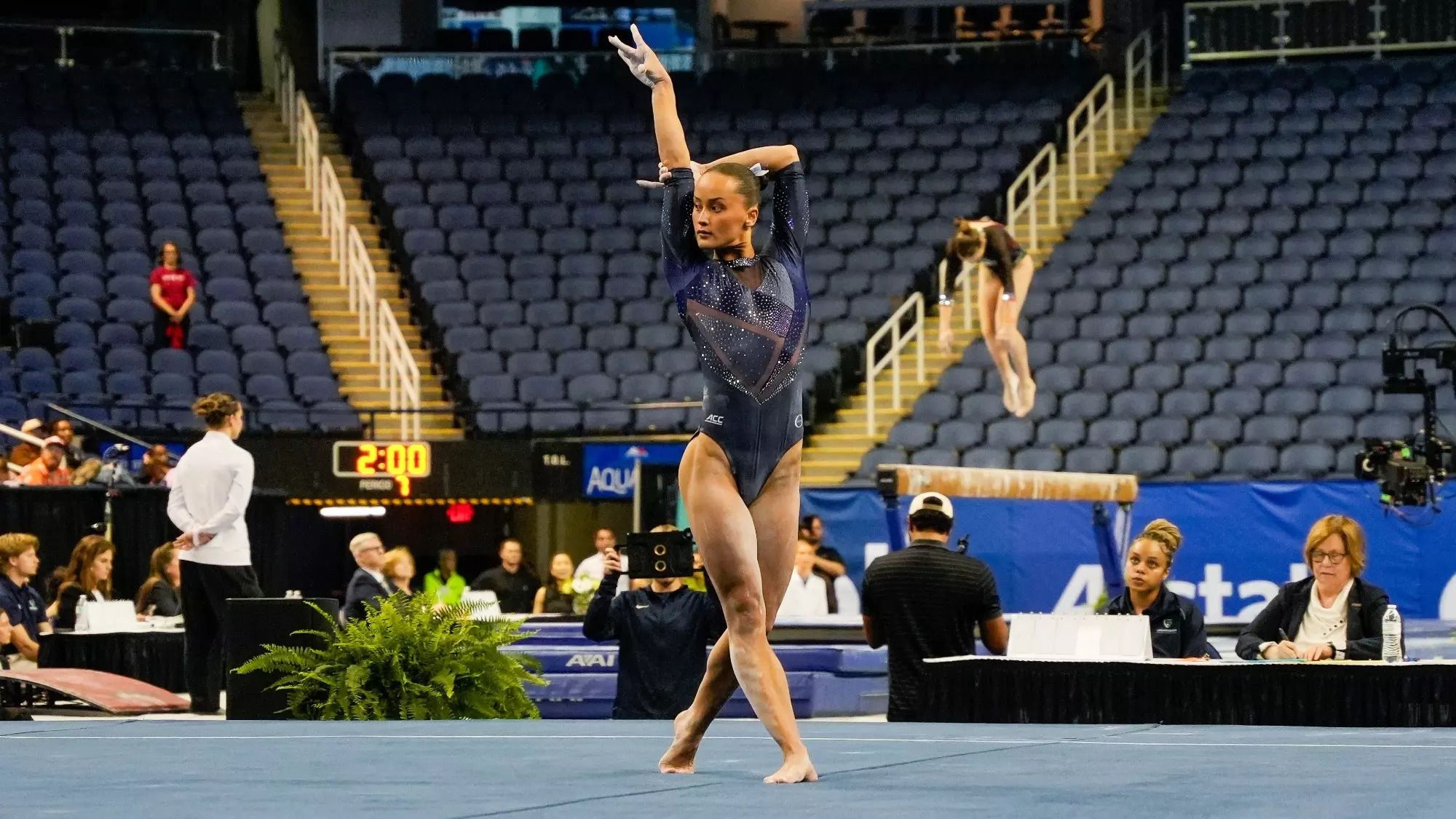
CJ Keuneke, a sophomore on the California gymnastics team, which makes two trips to the east coast annually, appreciates the conference’s scheduling tactics, mitigating cross-country travel.
“We try to travel [to East Coast meets] around the same time that we would travel for a closer meet,” Keuneke said. “It's the same day we would travel, and we normally miss around the same amount of classes.”
With a smaller number of teams in the ACC for gymnastics, schools like Cal take advantage of nonconference opportunities closer to home, and make just two trips to the East Coast annually, helping keep its athletes in class.
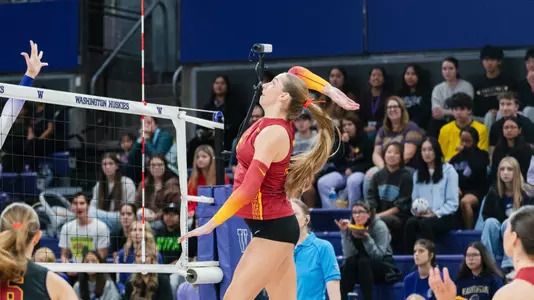
In other circumstances, however, just two long road trips is not as feasible. USC volleyball, along with other West Coast Big Ten schools such as UCLA, Oregon and Washington, compete in a conference with nearly 20 teams, making it impossible to travel long just twice a year.
“It's not so much that we're missing school. I think the difference for us is getting in and getting back home,” Adonia Faumuina, a redshirt senior for USC volleyball, said. “They try to schedule our games on, for example, a Thursday and a Sunday. But I would say, the big thing is we’re losing hours of sleep.”
Beyond the hours lost, quality sleep can be hard to come by for student-athletes on long road trips. Even in hotels, simply being away from home can hurt sleep quality.
“I did have a hard time falling asleep on away trips just kind of just knowing the burden of the travel day, and then also just being in a new space, not being in your home,” Abigail Mullen, a sophomore for USC volleyball said. “Sleeping on away trips has been hard, especially whenever we're ahead of time, because we're waking up earlier than we're used to.”
Because it is tangible and proven to have an effect on athletes’ physical and mental performance, sleep is heavily researched and prioritized by professionals which work with athletes to ensure their well-being.
Dr. Justin Anderson, the founder and CEO of Premier Sports Psychology—a company that works with numerous professional leagues and collegiate conferences—is one of many industry professionals devoting significant attention to sleep.
“Particularly for those that travel a lot, if that travel impacts sleep, that can be a really important component,” Dr. Anderson said. “If we get less sleep, injuries go up, mental health goes down, and we start to see what I call the stress threshold drops. That means it takes less stress to cause us to go into a more reactive or defensive place, and we're not our best selves. We're not really growing in that space.”
Premier Sport Psychology will sometimes encourage spending an extra night on the road, allowing for a quality sleep following competition. Unfortunately for college athletes expected to be in class the day after competition, this isn’t a feasible alternative.
Regardless of accommodations made to minimize lost hours of sleep, travel itself, especially for programs flying commercial, presents plenty of potential stressors.
“When you're flying commercial, the food, the access to water, hydration, stuff like that. It's a little less accessible on the commercial flights. Then you're sitting in uncomfortable chairs at the airport waiting to get on the flight, your bigger crowds that you're getting on with,” Dr. Anderson said. “Sometimes you've got crying children or other things going on on those flights that you don't have to deal with on the charter flights and just in general, charter flight seating is usually not as cramped.”
Universities with significant donor backing charter private flights for some athletic programs, mitigating these effects for a select group of athletes. According to a statement from the University of Louisville, however, most Division I universities operate at a financial deficit, so even teams flying private may be costing their institution.
A limited number of student-athletes reap the benefits of private travel accommodations, leaving athletes across the nation to face additional commercial travel-related struggles.
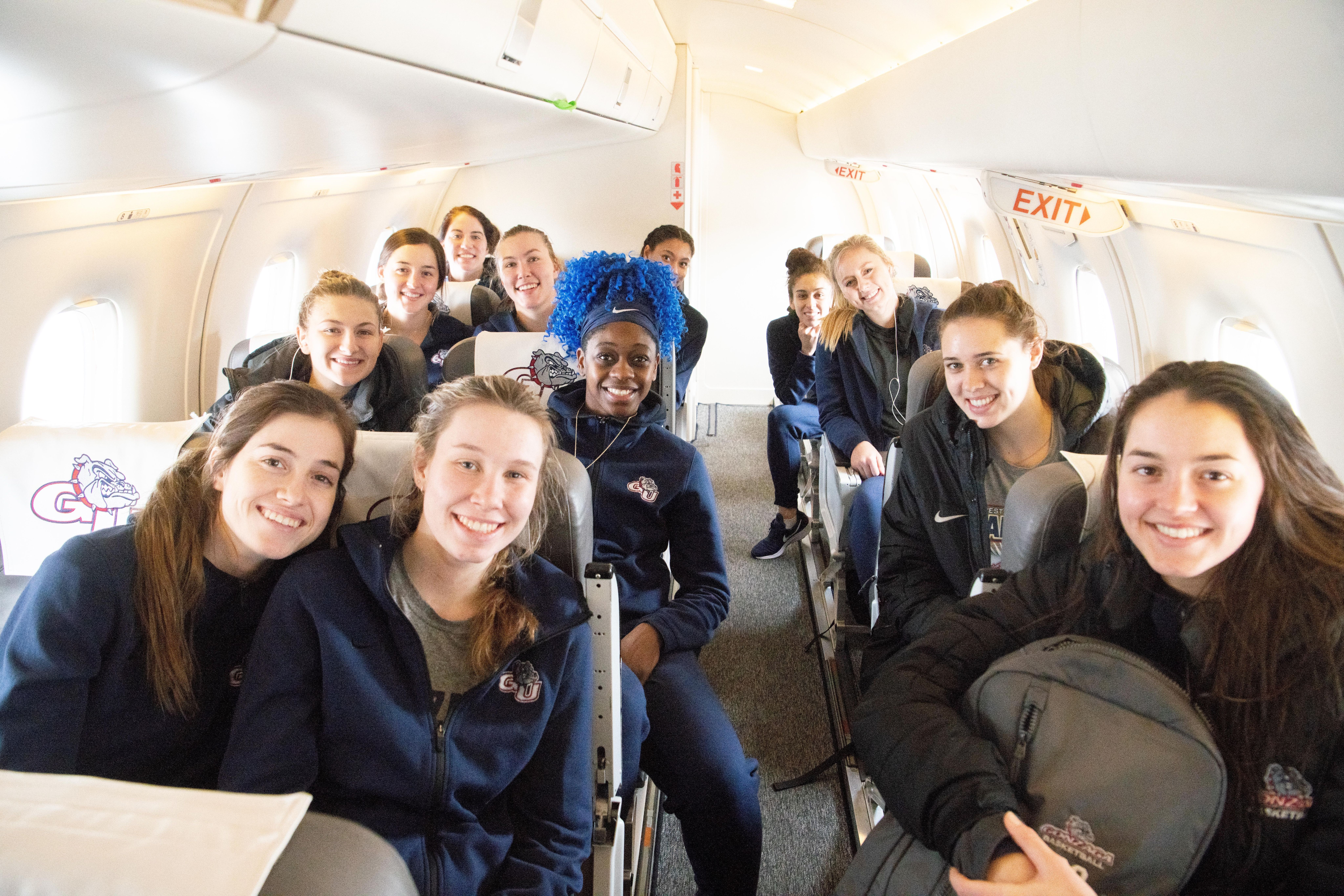
Increased hours on a plane means an increase in the physical and mental toll, regardless of avoiding missed class, making establishing a routine more difficult.
“I try to keep it consistent. You train the same way you compete and that goes for my preparation mentally,” Keuneke said. “On the physical side, I prepare differently. I try to do more recovery and drink more water and we take different actions on travel day. We stretch more, or we wear fireflies on our knees to keep our blood moving and things like that. But mentally, I try to keep it consistent.”
Student-athletes seek consistency in both their sport and education, especially those enduring grueling travel and unfamiliar environments as a result of conference realignment. Athletes have unique resources in some situations, but the transition remains an up-hill battle.
“The mental preparation is the same, but it’s also about different environments. At UCLA, that's across town, we've been there before. But Penn State, none of us had ever been in that arena or played in that gym.” Faumuina said. “We have our sports psych person who helps us go through breathing techniques, and our head coach is also big on those techniques to adjust to those new places.”
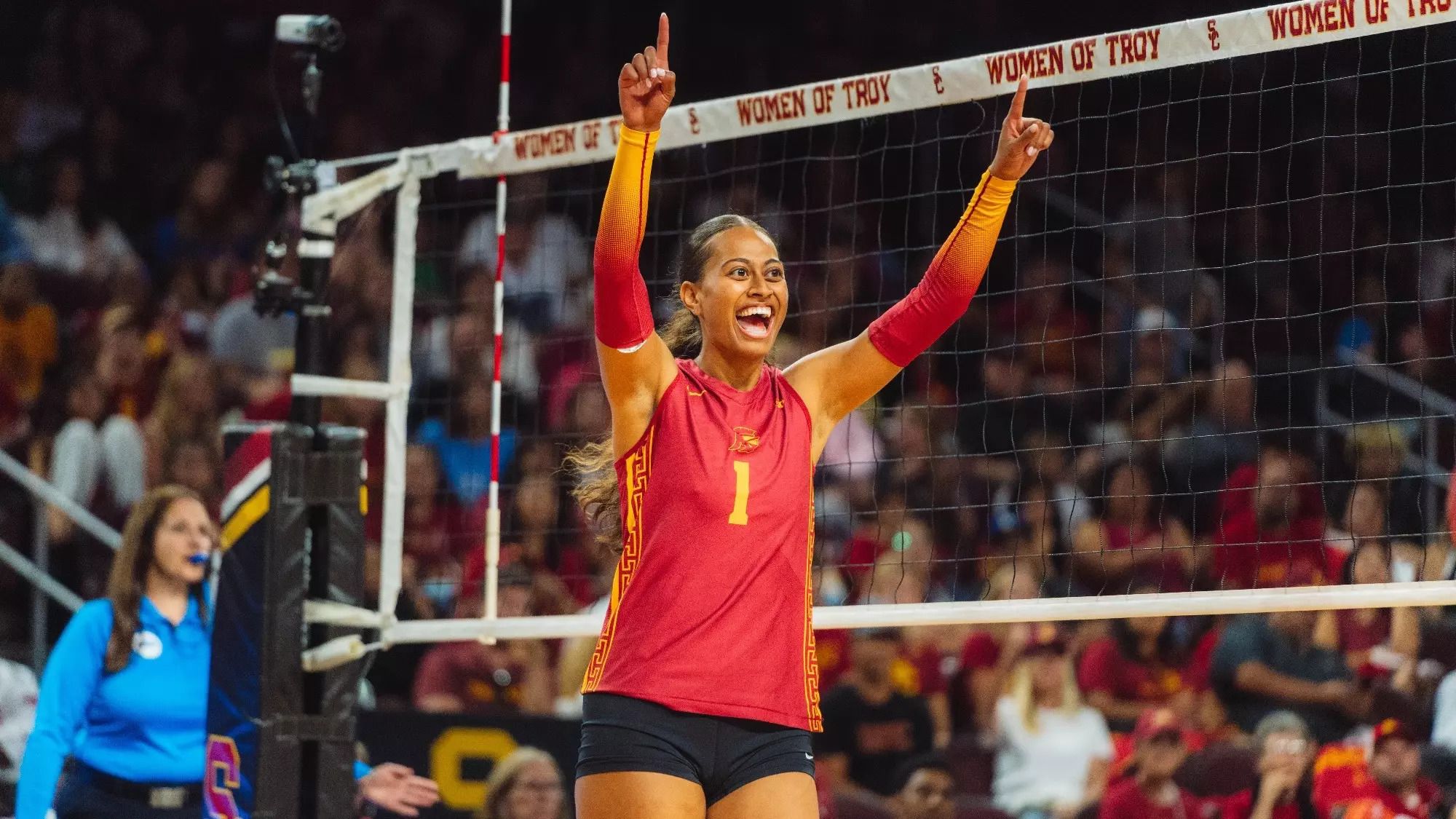
For student-athletes looking to minimize missed class while being prepared to compete at the highest level, time is valuable, but can also be an enemy.
“There are certain situations where we get in and our practice block is cut 30 minutes short or something like that,” Mullen said. “And it's like, maybe the practice was something that really got me into the zone for being able to play in that arena the next day, and then things like that happen, so I definitely think it really is about adjusting as you go.”
Schools across the country have mental health professionals and sports psychologists, among other resources, to work within athletic departments to best support student-athletes in these endeavors.
As coaches and schools undoubtedly have to acknowledge the potential difficulties of travels to recruits, these professionals can be a tool to ensure fear of travel-related stress doesn’t deter an athlete from choosing a school.
“Travel is something that is talked about during the recruiting process, but they talk about all the programs they have in place that will support you,” Mullen said. “Whether that's academically, like all the different tutors or academic specialists, or our sports psych and other things that will help when traveling.”
Some schools have even taken support measures beyond the university level and partnered with third parties. Premier Sport Psychology, among numerous similar organizations, benefits from such measures.
“We're becoming more valuable, quite honestly, because performance levels and competition is only continuing to increase,” Dr. Anderson said. “This can be a subjective issue, meaning, ‘If I learn more about myself and have deeper awareness of what works for me, then take active steps to help manage what I'm going through in a better, more optimal way, I can be healthier and perform better. That's what a lot of the elite athletes are seeking.”
No matter what steps exist to negate travel-related stress on student athletes, a six hour flight before or after competing at a high level is never conducive for the human body. Keuneke, Faumuina and Mullen all have experienced additional soreness in practices after cross-country travel days, more so than nearby competition.
The stress on the mind and body for athletes travelling cross-country and balancing a college education will never disappear, but conference alignment isn’t going anywhere, so it’s important for the most-affected affected to attack the situation with a positive mindset.
"It's a big plus to be in the Big Ten. There’s way more competition, you're playing in the best conference, you’re getting to see all these new places and be a part of history as being a part of the inaugural seasons of USC in the Big Ten,” Faumuina said.
Veteran leadership is as important as ever for programs taking the challenge head-on and mindset can be all the difference.
“Our team especially emphasizes not making any excuses,” Keuneke said. “You have to be able to do it under any conditions. One of our core values is adaptability and another is also accountability, so we emphasize that we can adapt to any situation we're in, even if it's not ideal.”
Keuneke committed to California prior to news of realignment, and Faumuina had multiple years at USC under her belt. Still, neither athlete backed down from the challenge.
“I was recruited back in 2022 so we actually didn't even know about any of the conference realignment stuff there was, like, talk about all of that, but I wasn't really thinking about it,” Keuneke said. “Then the realignment happened shortly after I committed, and it didn't really change anything for me.”
Being from just outside of Los Angeles, Faumuina’s family attended nearly every match prior to USC’s move to the Big Ten. Despite an increase in matches far from home, she embraced the change.
“'I’m very blessed to have a really big family,” Faumuina said. “I even had people at Rutgers and Maryland because some of my uncles are based out there for the military. So just getting to play in those arenas, having family that never sees me, seeing me play in person and getting to see them because I rarely get to see them because of volleyball, it's been a pretty cool experience for me.”
Her teammate, Mullen, from Kansas City, Mo., is far from home, but left comfortably because of conference realignment and competing in a conference with midwest programs.
“Being from the Midwest, I honestly saw it [conference realignment] as a benefit,” Mullen said. “A lot of my family's from the Midwest as well, so it's easier for them to go to games.”
In the initial aftermath of catastrophic changes to college sports’ biggest conferences, doors have been closed on long-standing rivalries and reasonable travel in some cases which can be harmful to student-athletes. But at the same time, new doors open as realignment continues.
Conference realignment is completely unpredictable. California is competing in a conference on the Atlantic coast. The once-storied and recently-dissolved Pacific Athletic Conference (Pac-12) is set to relaunch with Texas State as a member. Schools no longer switch conferences to compete with universities of equal research standards or similar geographic locations. As everything is in modern sports, it’s about money.
Some opportunities may arise for student-athletes thanks to realignment, but even in those circumstances, catastrophic change can still be detrimental from numerous angles.
Stopping conference realignment is no longer in the cards, but the NCAA and its institutions need to proceed with caution, because beyond the new rivalries and television deals, student-athletes experience monumental change.