The Many Makings of College Basketball Rivalries
A look at all the ways rivalries emerge and develop in college basketball


On a mid-November Sunday afternoon, in front of a packed stadium for the battle of “The Real SC”, the University of Southern California and the University of South Carolina made a pitch to the basketball community.
“This is the matchup to watch.”
During the 32 games that span five months, rivalries heighten the stakes during the long season. For players and coaches, these highly anticipated matchups test the team's preparation and progress. For fans, they cultivate a sense of pride and belonging, lasting long beyond the forty minutes of play. And for the media, it's when the money pours in. However you slice it, rivalries are good for the game.
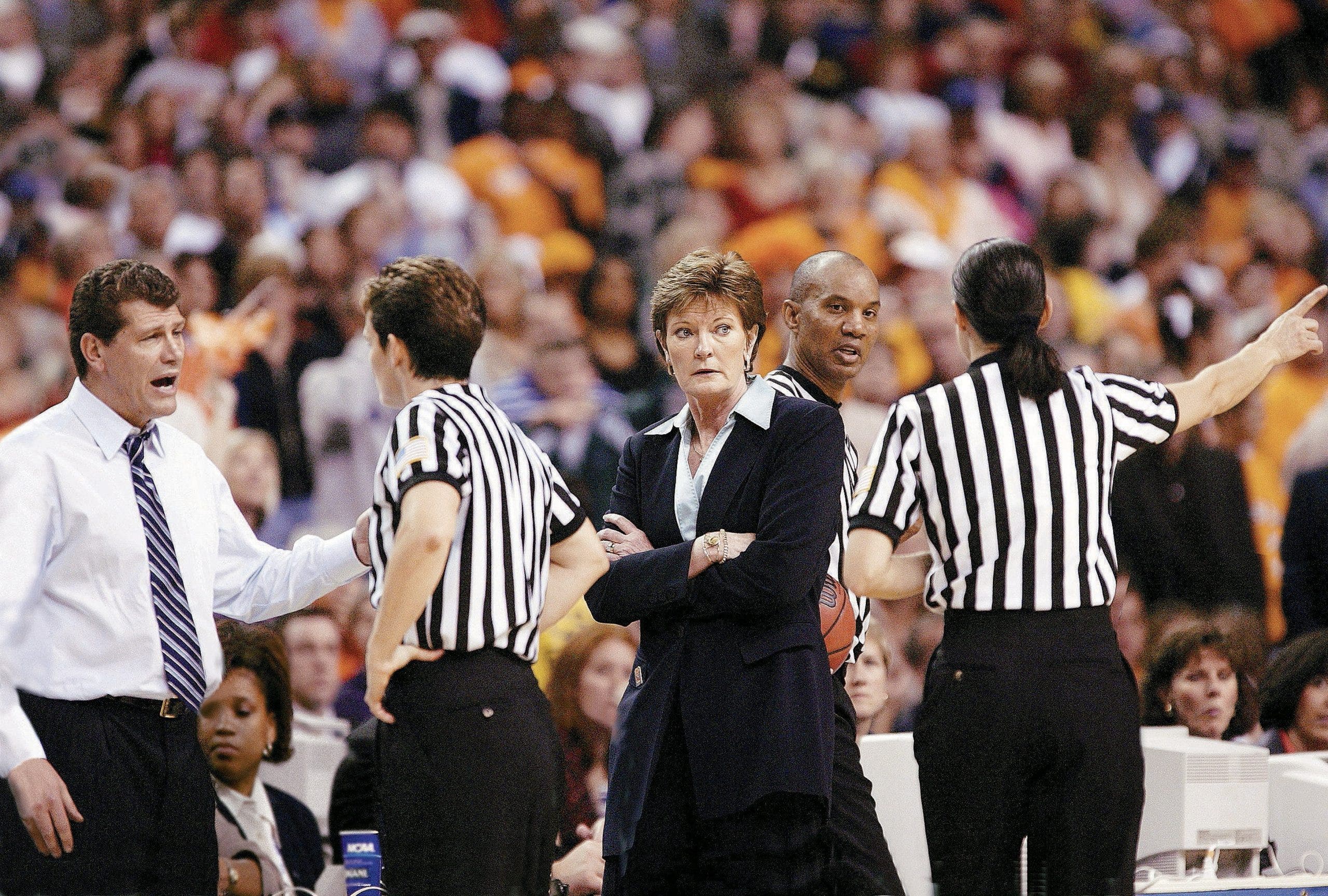
There are the historic ones, woven into the very fabric of women's collegiate basketball. Namely, Tennessee and Connecticut, whose fierce competition has been ongoing for almost thirty years. These are the winningest programs in women’s college basketball history: between the two teams, they have 20 national championships and 94 WNBA draft picks. What started at their first meeting in 1995 was cemented months later when the Huskies returned and defeated the Lady Vols in the national championship game, claiming their first NCAA title.
Huskies Coach Geno Auremia and the Lady Vols’ late coach, Pat Summitt, were outspoken competitors whose visibly contentious relationship on the sideline and in the media heightened the rivalry. In the 3-part Apple TV docuseries, The Dynasty: UConn Huskies, the entire second episode was dedicated to this very matchup. Reflecting on the origin and escalation of the rivalry, Auremia reflected, "Familiarity breeds contempt. And that's when it started to go sideways.”
Then, there are rivalries induced by geographic proximity: Stanford vs. Cal, Duke vs. North Carolina, and Iowa vs. Iowa State, to name just a few. Across all programs, teams spend months training for the coveted bragging rights – just to do it all again the following year. Stanford and the University of California have played over 100 times in a matchup now coined “The Battle of the Bay.” Similarly, Duke and North Carolina have also passed the 100-game mark, a matchup that recently intensified after their first meeting in the NCAA tournament in March 2025, when Duke defeated North Carolina 47-38.
And still, every year new rivalries emerge and develop. One way they are shaped is by player movement. Especially in this era of NIL, where lucrative brand deals exist within certain programs, prying away talent recruited and developed by other programs exacerbates tensions.
This year, eyes will be on the January 9th matchup between Iowa State and Oklahoma State to see if Audi Crooks leads the Cowgirls against the Cyclones, the program where she spent the first three years of her collegiate career. Crooks is coming off a standout junior season, finishing second in the nation for scoring and making a name for herself and the Cyclones. However, it was quickly evident after Iowa State’s first-round tournament loss to Syracuse that the team would be rebuilding. Crooks joined eight teammates in the portal, became the No. 1 recruit, and found a home at Oklahoma State.

Over in the SEC, a similar transfer rivalry is emerging between the University of Texas and the University of South Carolina. After two years with the Longhorns, Jordan Lee has joined the Gamecocks for her junior season, a program she was recruited to while in high school. In an interview with The State, she reflected on the move.
“I think when you’re 16, and you’re making your decision, there’s a lot of different things [you consider],” said Lee. “Now being 20 and playing two years of college basketball…you’re just looking for different things.”
She took only one visit to Columbia before announcing her commitment. The January 3rd game between the SEC powerhouses will draw extra attention as it is a rematch of last year’s SEC final, where the Longhorns beat South Carolina, 78-61.
Others are cultivated by national attention.
Under this category, we find “The Real SC”. Sunday’s game was just the program’s sixth meeting, and the second installment of this nonconference series that started last year. Independently, each team attracts a lot of discussion. Both programs were ranked 1 and 2, respectively, in top recruiting classes for 2026 and are home to many projected number-one draft picks. But this year's matchup was also a chance at redemption. Just eight months earlier, South Carolina ended USC’s March Madness run in the second round with a decisive 101-61 win.
USC returns this season with perhaps the best player in the country, Juju Watkins, back on the court. Despite being separated by geography, conference, and tradition, these two programs, by virtue of quality and coincidence, have found competition – and a mirror – in each other.
And the game delivered, with all the necessary components for a burgeoning rivalry:
- Career-high performances: South Carolina senior guard Tessa Johnson shot 9-for-16 from the field, scoring a career-high 28 points. (She exceeded this mark not long after against another fierce opponent – the UCONN Huskies)
- Fourth-quarter comeback: With less than four minutes remaining, the Gamecocks held a commanding 12-point lead. But a late push, fueled by USC's Jazzy Davidson and JuJu Watkins, cut the deficit to just two points with 42 seconds left.
- Controversial calls: With 15 seconds remaining, South Carolina's Jordan Lee blocked Watkins' potential game-tying layup. Officials initially awarded possession to USC, but after Gamecocks coach Dawn Staley challenged the ruling, the call was overturned, giving South Carolina possession and effectively sealing the victory.
- Good old-fashioned trash talk: On her way out of the post-game press conference, South Carolina forward Chloe Kitts had one final message for the room and the world. “Now you guys can stop saying who 'The Real SC' is because we are." Mic drop.
With South Carolina’s 6-0 record over USC, the “Real SC,” for now, remains the Gamecocks.